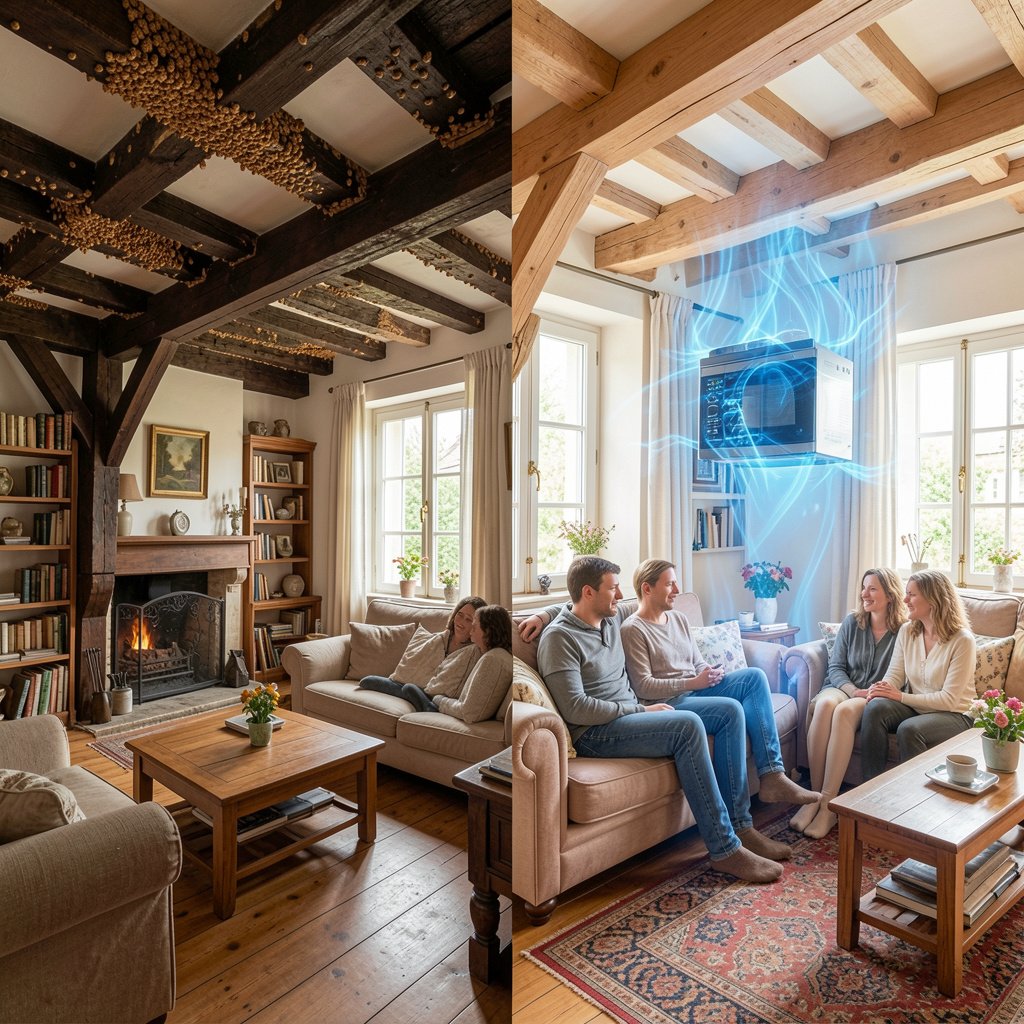
When people first hear about microwave technology for woodworm treatment, they often assume the equipment must be complicated to operate. After all, eliminating insects hidden deep inside timber using electromagnetic energy sounds like advanced technology—and it is. However, advanced technology does not necessarily mean difficult to use.
Professional microwave systems are designed with usability in mind. Shashel develops its equipment for trained operators, combining sophisticated engineering with practical controls that support efficient and reliable woodworm treatment. While the devices are intended for professional use rather than casual DIY projects, they are designed to help technicians perform treatments confidently and consistently.
Professional Equipment Designed for Practical Use
Modern pest control professionals need equipment that is both effective and practical.
In everyday work, technicians often move between multiple job sites and encounter different types of buildings, including:
- Residential homes
- Historic properties
- Museums
- Churches
- Commercial buildings
- Agricultural structures
Equipment must therefore be designed to support efficient operation in a variety of environments.
Why Training Matters
Although the controls are designed for professional use, successful microwave treatment depends on more than simply turning on the device.
Operators need to understand:
- How wood-boring insects behave
- The characteristics of different types of timber
- Moisture conditions
- Building construction
- Treatment planning
- Safe operating procedures
Training helps technicians use the equipment correctly and select the most appropriate treatment approach for each project.
The Technology Behind the Device
Shashel microwave systems use carefully controlled non-ionizing microwave energy.
Wood-boring insects contain considerably more moisture than dry, seasoned timber.
As the microwave energy passes through the wood:
- Moisture-rich insects absorb the energy more efficiently.
- Their internal temperature rises.
- Active insects within the treated area can be eliminated.
The treatment can target:
- Eggs
- Larvae
- Pupae
- Adult beetles present within the treated area
Understanding these principles helps technicians apply the technology effectively.
User-Friendly Design Features
Professional equipment is most valuable when it is straightforward to operate in real-world conditions.
Well-designed microwave systems generally focus on features such as:
- Clear operating controls
- Practical handling
- Reliable performance
- Durable construction
- Consistent energy delivery
- Easy transport between job sites
These characteristics allow technicians to concentrate on the treatment rather than struggling with unnecessary complexity.
Every Project Starts with an Assessment
Before using the equipment, technicians evaluate the property.
This assessment typically includes:
- Identifying active infestation areas
- Examining timber dimensions
- Checking moisture conditions
- Evaluating accessibility
- Understanding the building layout
- Planning the treatment sequence
Good preparation makes the treatment process more efficient and helps ensure that the device is used appropriately.
Not a One-Button Solution
Although the equipment is designed to be practical, microwave treatment is not simply a matter of pressing a single button.
Each project requires professional judgment.
Technicians consider factors such as:
- The extent of the infestation
- The location of the timber
- Structural characteristics
- Preservation requirements
- Project objectives
The device provides the technology, while the operator provides the expertise.
Suitable for Many Types of Work
Professional microwave devices can be used for projects involving:
- Roof beams
- Floor joists
- Timber framing
- Decorative ceilings
- Staircases
- Antique furniture
- Structural supports
- Historic wooden buildings
Because every structure is different, flexibility is an important part of the equipment’s design.
Supporting Efficient Workflows
For pest control companies and restoration specialists, ease of use also means improving day-to-day efficiency.
Equipment that is well designed can help professionals:
- Organize treatments effectively
- Work systematically
- Focus on affected areas
- Preserve unaffected timber
- Complete projects with greater consistency
This practical approach benefits both technicians and property owners.
Safety Remains a Priority
Ease of use should never come at the expense of safety.
Professional operators follow the manufacturer’s instructions and established safety procedures throughout every treatment.
These procedures include:
- Preparing the treatment area
- Controlling access during operation
- Assessing the timber before treatment
- Using the equipment as instructed
- Confirming the work area is ready for normal use after treatment
Combining user-friendly equipment with proper training supports safe and effective operation.
Helping Preserve Valuable Timber
The goal of microwave treatment is not only to eliminate woodworms but also to protect valuable wooden structures.
This is especially important for:
- Heritage buildings
- Historic homes
- Museums
- Churches
- Timber-framed houses
- Antique furniture
By targeting active wood-boring insects without routine chemical application, Shashel supports modern conservation and wood preservation practices.
Designed for Today’s Pest Control Industry
The pest control industry continues to evolve as professionals look for solutions that combine:
- Effective treatment
- Reliable equipment
- Sustainable practices
- Preservation of original timber
- Reduced reliance on chemical pesticides
Microwave technology meets these changing expectations while remaining practical for trained users.
Confidence Through Experience
Like any specialized professional equipment, operators become more confident as they gain experience.
With appropriate training and regular use, technicians develop familiarity with:
- Treatment planning
- Equipment setup
- Timber assessment
- Project organization
- Efficient application techniques
This growing experience helps improve consistency across a wide range of projects.
Conclusion
Operating a Shashel microwave device is not about mastering overly complicated technology—it’s about combining well-designed equipment with professional knowledge and training. The devices are engineered to be practical for trained users while delivering precise, chemical-free treatment for active wood-boring insect infestations.